
ENGTANGLED MINDS
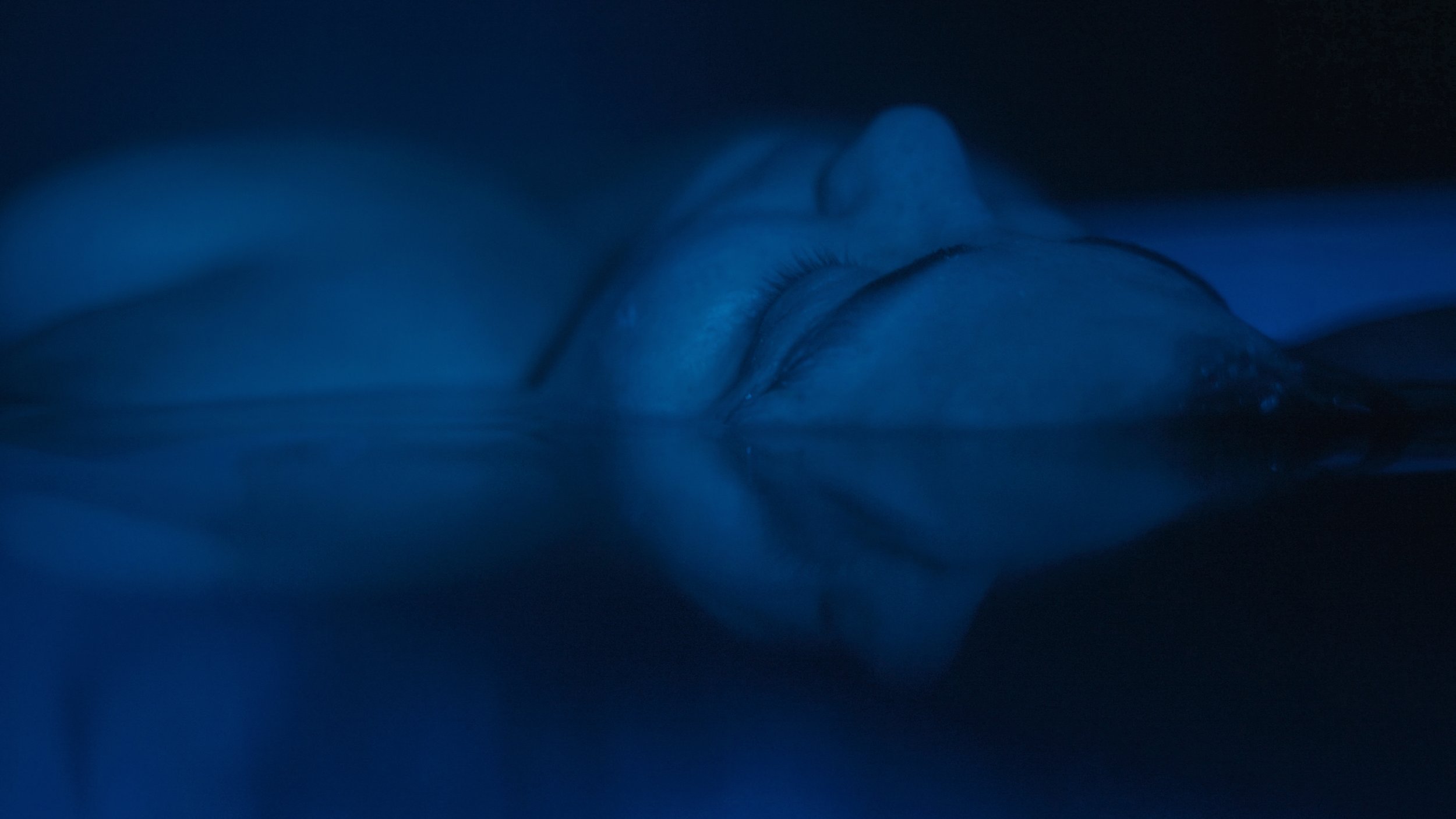
4K video with 5.1 sound, 78 minutes, 2026
Confronted with the limitations of Western medicine, four people seek relief from physical and mental pain through treatments that induce altered states of consciousness.
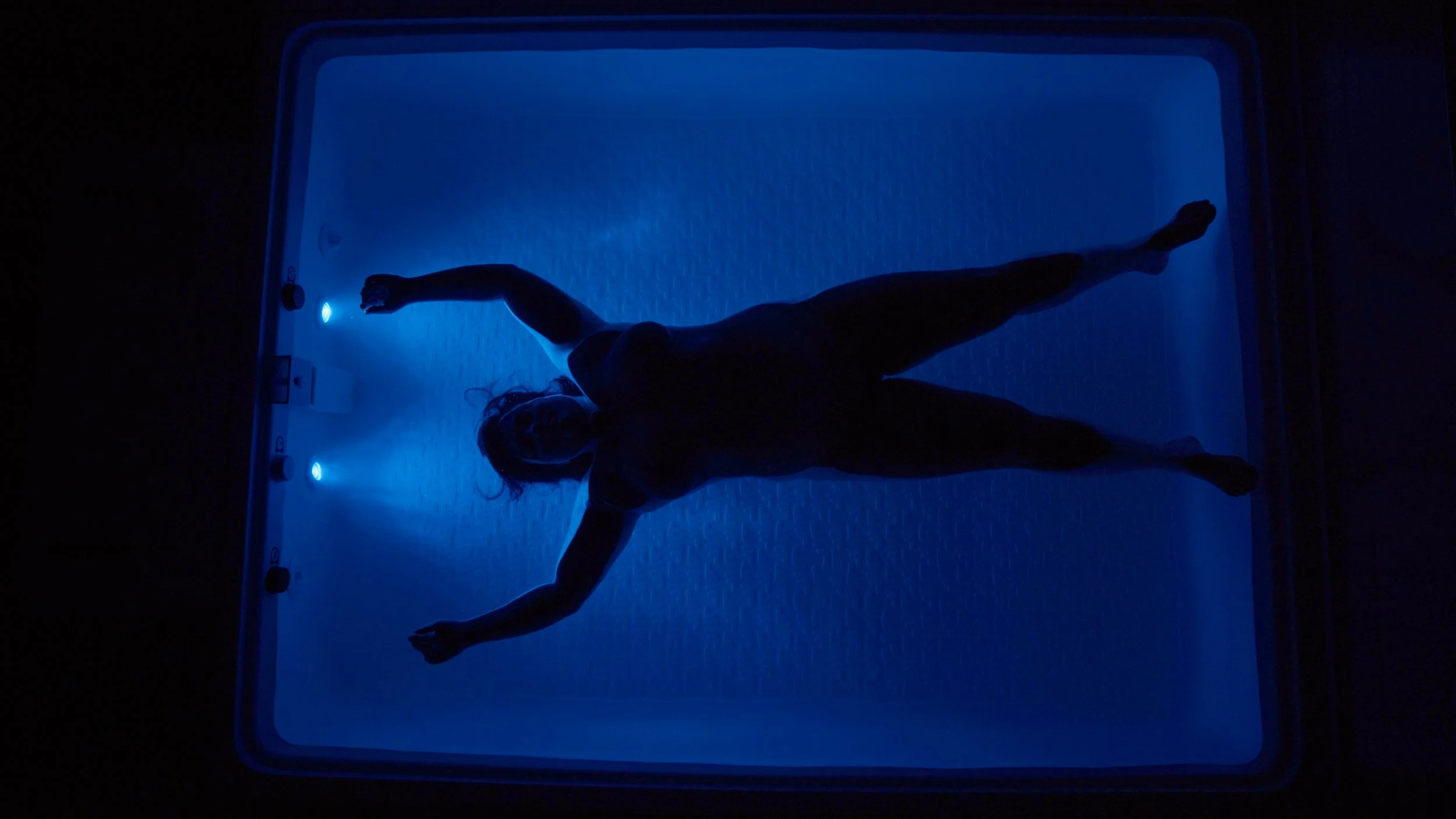
A propulsive, somatic opening signals an immersive experience ahead: Isabel García turns to a Mazatec healer in Mexico’s Sierra Mazateca, working with sacred mushrooms to release her emotional anguish. Under hypnosis, Bhargav Lenka learns to access deep layers of his unconscious mind as a resource against chronic pain from a life-altering car accident in India. LePoleon Williams crafts African instruments in his Florida carport and plays trance-inducing rhythms that ease his post-traumatic anxiety. In a spa in New Hampshire, Christina Nice floats in a tub of highly salted water, entering a dreamlike state that soothes shooting leg pains from Lyme disease.
Drawing on her identity as a biracial, multilingual filmmaker, Julie Mallozzi weaves a rich tapestry of these culturally distinct altered-state practices. A final thread offers a meditative throughline connecting the protagonists’ experience: from a temple in Massachusetts, Buddhist nuns chant rhythmically in Cantonese and offer insights gained through deep meditation. Their presence echoes across each journey, illuminating how ancient wisdom can connect us to a shared consciousness in the pursuit of healing from within.
“I just feel like I can transcend my physical being, and just be one as a presence with the universe.”

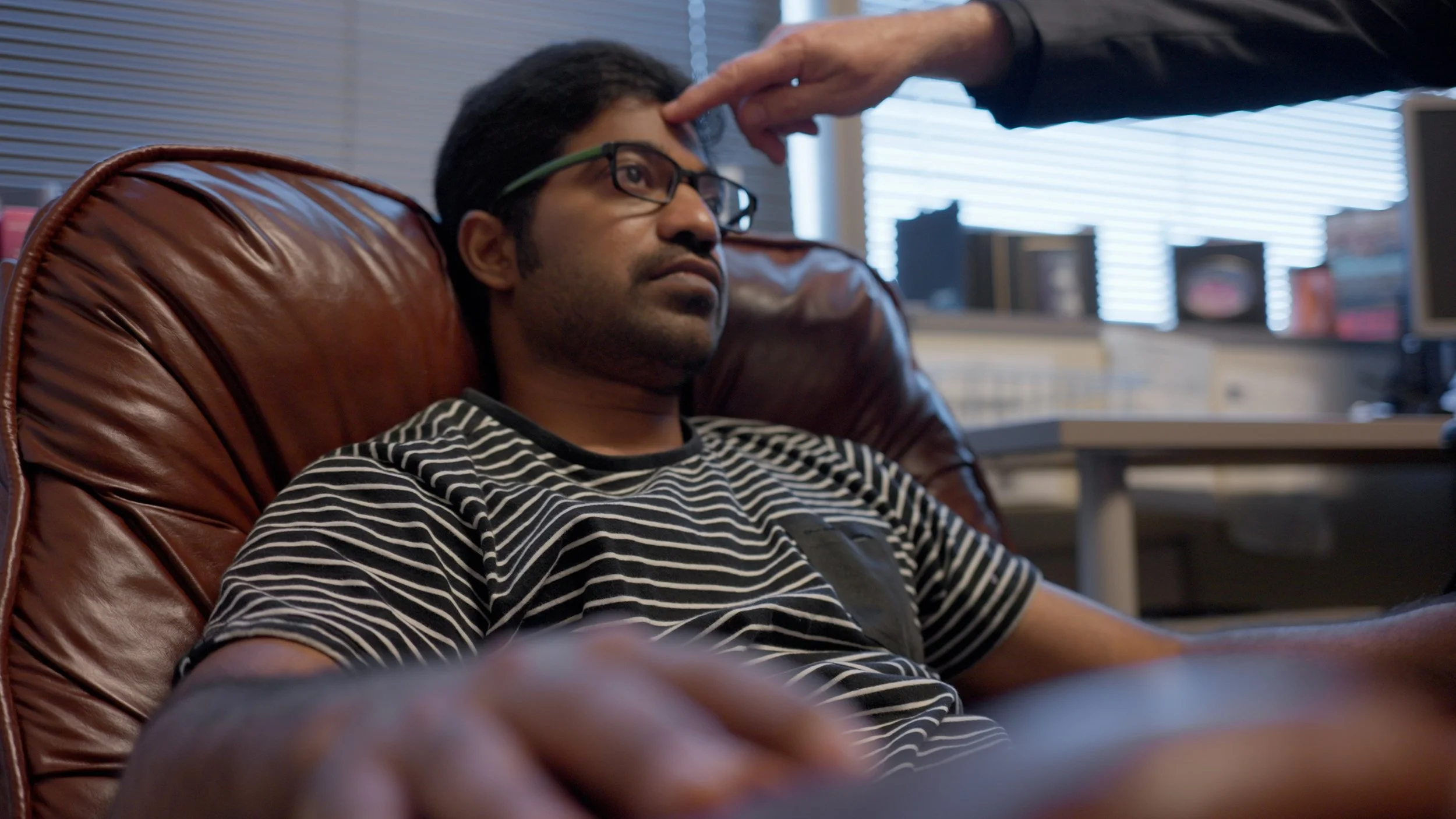
“Your unconscious mind can also be a tremendous resource to you... how is it going to serve you today?"
“Usually our heart is very entangled, and that’s why we can't yield wisdom. With your mind settled you slowly make out what’s buried underneath.”

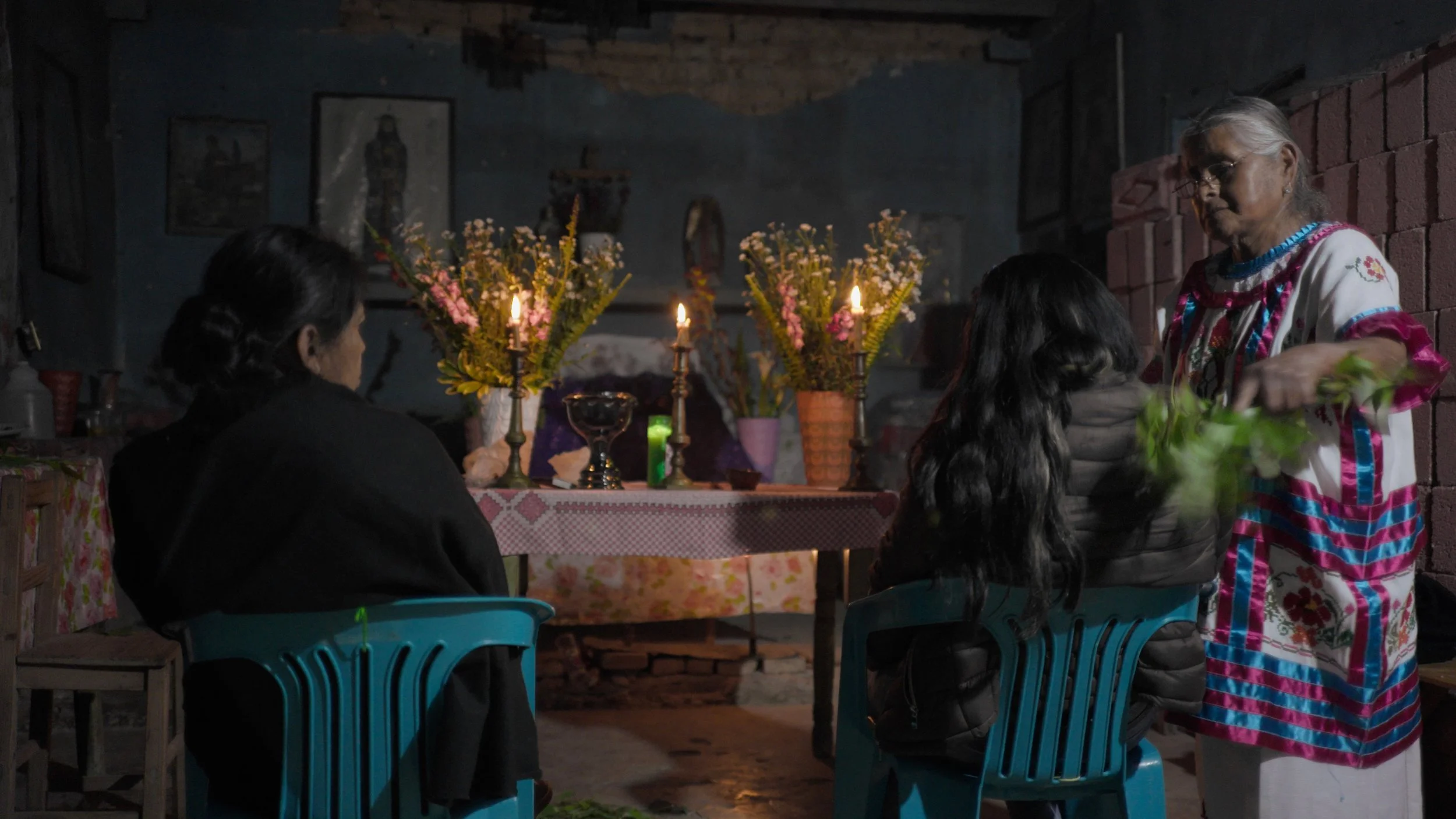
“I felt my arm fall off, and then suddenly it went back to normal. Something huge appeared in my mind, that I stumbled over. Later, I realized it was my stomach.”
“I saw myself buried in a grave... When I came out of the grave, I had no leg pain.”
Director’s Statement
I had never made a film like this before. In the aftermath of the pandemic, many of my friends and family members were struggling with chronic pain, anxiety, depression, and other conditions that Western medicine often struggles to resolve. My Chinese-American mother always urged us to “heal ourselves.” I began to wonder whether a film could help people connect with alternative ways to arrive at physical and emotional well-being.
Could stories of self-healing become transformative experiences for viewers themselves? What cinematic language might reflect the shared pathways of altered-state practices like psychedelics, hypnosis, meditation, flotation therapy, and music-induced trance? Might cinema in fact be an ideal medium to explore the notion of a shared consciousness?
ENTANGLED MINDS weaves together several culturally distinct practices centered on altered states of consciousness. What begins as separate stories — four people confronting chronic pain, anxiety, depression, and trauma — gradually evolves into an interconnected journey toward spiritual healing. Inspired in part by poet and theorist Fred Moten’s distinction between “observation” and “observance,” the film moves beyond verité documentation into a more immersive, reverent engagement with the dreamlike spaces these rituals open within the mind and body. Through increasingly abstract imagery and evocative sound design, viewers are invited to explore deeper layers of consciousness alongside the film’s participants.
As a biracial and multilingual filmmaker, I am deeply drawn to the complex intersections between cultures and to the ways traditional practices can speak to contemporary crises. Today, nearly one in four American adults lives with chronic pain, while rates of anxiety, depression, PTSD, and addiction continue to rise globally. Conventional biomedical treatments — often centered on pharmaceuticals and surgery — can be insufficient, inaccessible, or lead to dependency. We urgently need broader approaches to healing.
ENTANGLED MINDS immerses audiences in cultural traditions that harness the power of the unconscious mind to address chronic pain, trauma, anxiety, depression, and addiction with surprising effectiveness. Despite their cultural differences, these practices share intriguing neurological patterns: they quiet the brain’s default mode network, allowing new connections to emerge between disparate regions of the brain. Participants often describe experiences of profound introspection, spiritual awakening, and ego dissolution.
The film’s form mirrors this neurological process. Separate narratives gradually dissolve into a collective perspective, guiding viewers into a deeply contemplative state. One test audience member described feeling “not only the connection between people, but the connection between the body and the natural world it’s floating in.” Two viewers were moved to book their first float; another purchased a musical instrument to begin trance work.
Our hope is that ENTANGLED MINDS will expand public understanding of these healing modalities, encourage medical practitioners to integrate and refer patients to them, and contribute to broader movements around legality, accessibility, and insurance coverage. Above all, we hope the film offers an immersive sensory experience that reveals the many interconnected ways to unlock the healing power of the unconscious mind.
Impact
Increasing numbers of people are struggling with conditions like anxiety, depression, addiction, chronic pain, and PTSD that are not sufficiently addressed by our modern healthcare system, despite its sophistication.
The Western biomedical model has not historically embraced the use of our minds to heal our bodies. But doctors and neuroscientists are beginning to recognize the healing power of practices that ignite the power of the unconscious mind. Research reveals that psychedelics can enhance psychotherapy; meditation and hypnosis can help manage blood pressure and alleviate symptoms of depression, anxiety, and chronic pain; and flotation and rhythm-induced trances may dramatically reduce stress. These processes share neurological signatures which seem to correspond with experiences of deep introspection, spiritual awakening, and dissolution of the ego.
Our film aims to shed light on these practices’ demonstrated efficacy and help move the needle on understanding, access, and cultural competence. Our proposed impact campaign has two main parts: community screenings to reach people who suffer from anxiety, depression, addiction, PTSD, and chronic pain, so that they can learn about treatments involving altered states of consciousness; and educational screenings at medical schools, professional conferences for doctors and medical health professionals, health insurance industry conferences, and healthcare policy-making venues, to help ensure that these practices are prescribed and reimbursed by insurance.
Our Team
We have an amazing group of collaborators on this project: producer Emily Abi-Kheirs, DP Thomas Danielcizk, consulting editor Cecilia Préstamo, consulting producer Lucila Moctezuma, composer Ted Reichman, and sound designer Ernst Karel.
Funding
Support for this project has been generously provided by LEF Moving Image Fund, Human Family Unity Foundation, Harvard Initiative on the Study of Psychedelics in Culture and Society, the McMillan-Stewart Foundation, Bob Hong Foundation, Massachusetts Cultural Council, the Provostial Fund for the Arts and Humanities at Harvard University, the Film Study Center at Harvard, and Proyecto teonanácatl.
How you can help
This film has just been completed and we are seeking distribution and impact funding. You can make a tax-deductible donation through the Center for Independent Documentary or email Julie Mallozzi for more information.